
About service
Floor covering
Floor covering refers to materials used to finish the surface of floors, providing both aesthetic appeal and functional benefits such as durability and ease of maintenance. Common types of floor coverings include hardwood, laminate, vinyl, tile, and carpet, each offering unique characteristics suited to different environments and preferences. Choosing the right floor covering is crucial as it significantly impacts the overall look and feel of a space, enhancing comfort and contributing to the desired atmosphere of a room.
Our portfolio
About service
The floor is the foundation of your home. By choosing the right flooring material according to the purpose of each room, you achieve coziness, durability, and comfort.
Classification of floor coverings:
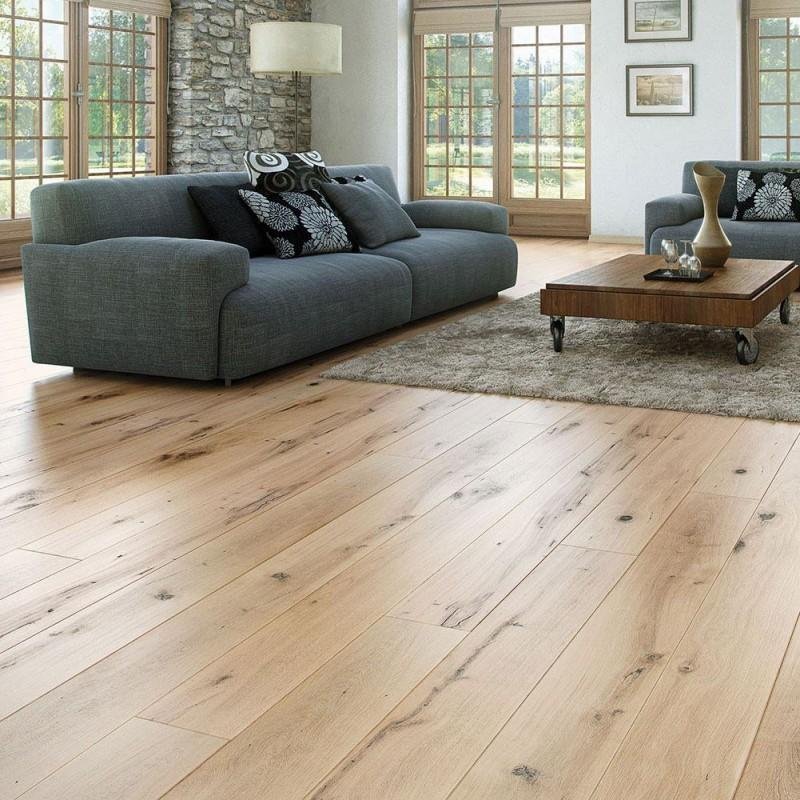
1) Wooden flooring – a natural and environmentally friendly material that adds warmth and coziness to your home. It is sufficiently moisture-resistant and enhances sound insulation in the room. A wide range of colors allows you to choose a covering that complements any interior. Wooden floors can last for many years.
There are three types of wooden flooring:
– Floorboards or engineered boards, made from two or more layers of wood, suitable for underfloor heating systems. This is the most affordable option for wooden flooring, with a lifespan of up to 30 years.
– Solid wood planks, treated wooden planks up to 5 cm in width coated with lacquer or oil. Such flooring can last for about 50 years and offers a variety of colors and natural patterns.
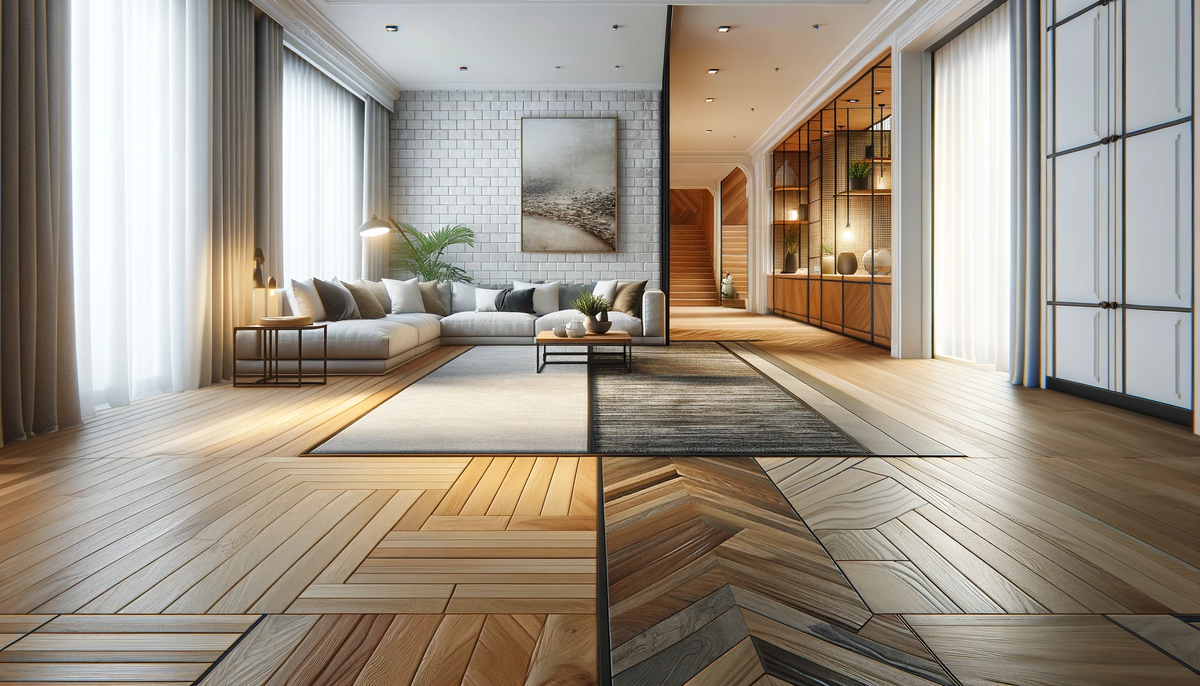
– Parquet is the most expensive type of wooden flooring, made from natural wood and coated with lacquer or oil. There are four types of parquet:
– Mosaic parquet: ready-made assembled patterns of square shape, easier to install.
– Solid parquet: large-sized planks resembling wooden boards in appearance.
– Block parquet: involves a labor-intensive laying process, allowing for individual design solutions.
– Inlaid parquet: the most expensive variety, custom-made floors tailored specifically for you.
Cons of wooden floors:
– Susceptible to scratches from high heels and furniture movement.
– Not highly moisture-resistant, making it less suitable for kitchens.
– Installation requires professional expertise.
– Relatively high cost.
– Not suitable for heated floors.
2) Types of stone coverings can be natural and artificial. These materials are highly durable, eco-friendly, easy to clean like tiles, and excellent for heated floors. A wide range of colors, textures, and patterns helps refine and create a unique design for your home. Stone coverings lend elegance, style, and sophistication to your space.
Types of natural stones for finishing:
– Marble comes in various colors and patterns, withstands high temperatures, but is less hard than granite and porous, which can lead to stains from products like coffee, tea, wine, and beets. Marble cannot be restored.
– Granite is dense, durable, and resistant to wear. It can be restored.
– Quartz is a luxurious stone, quite hard, with many varieties that can be semi-transparent or transparent. It can create a beautiful interior that remains stylish for many years.
– Travertine is light with low density but durable and heat-resistant. It is sensitive to acidic substances.
Artificial stone, more affordable, can be an excellent alternative to natural stone. Artificial stones also offer a wide range of colors and can fit into any interior. They are easy to maintain and moisture-resistant. Here are some types:
– Acrylic stone is dense, hygienic, can be polished, and is available in glossy, semi-glossy, and matte finishes. It can be thermoformed (rounded by heating the material).
– Polyester stone is similar to acrylic but cannot be thermoformed. It is prone to scratching and cannot withstand hot pans.
– Quartz agglomerate consists mainly of quartz sand. This material is very strong, hard, and eco-friendly, used in medical facilities. It is the most expensive artificial stone, durable, and suitable for placing hot cookware and cutting food.
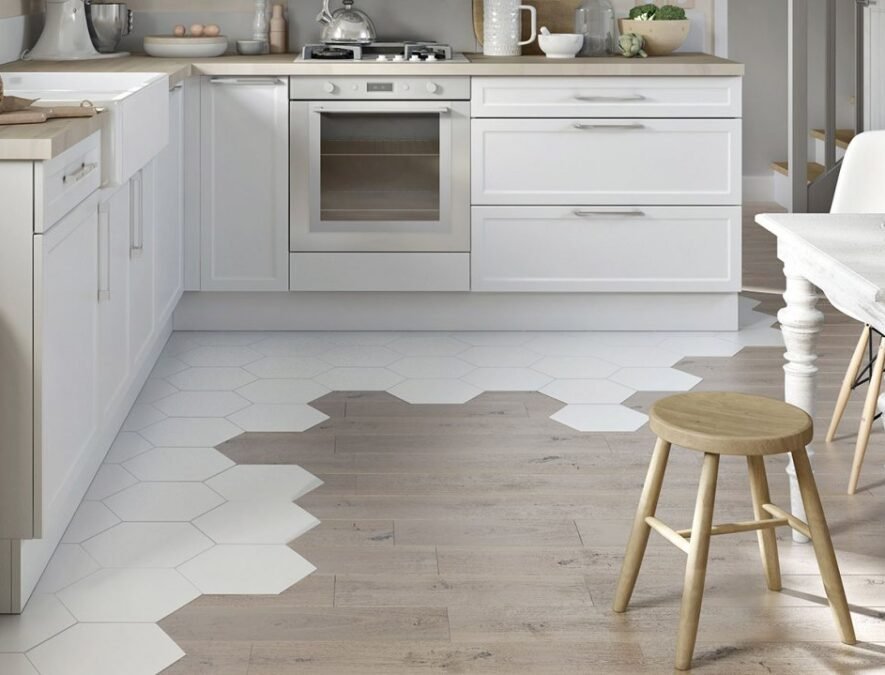
3) Ceramic coverings are easy to maintain, durable, convenient for cleaning, waterproof, and eco-friendly. They can be used both indoors and outdoors. The wide range of colors, shapes, and sizes allows ceramic tiles to dominate the market. They can be combined by color and texture to create beautiful spaces.
Types of tiles include:
1) Glazed
2) Glossy
3) Matte
4) Lappato
5) Rectified
6) Foam ceramic
With such variety and price range nowadays, ceramic tiles are accessible to all budgets. Tiles are ideal choices for kitchens, bathrooms, laundry rooms, and exterior building finishes, as well as pool areas.
The disadvantages of tiles depend on their type:
– Some are not very wear-resistant.
– They have a cold surface.
– They can create high levels of noise.
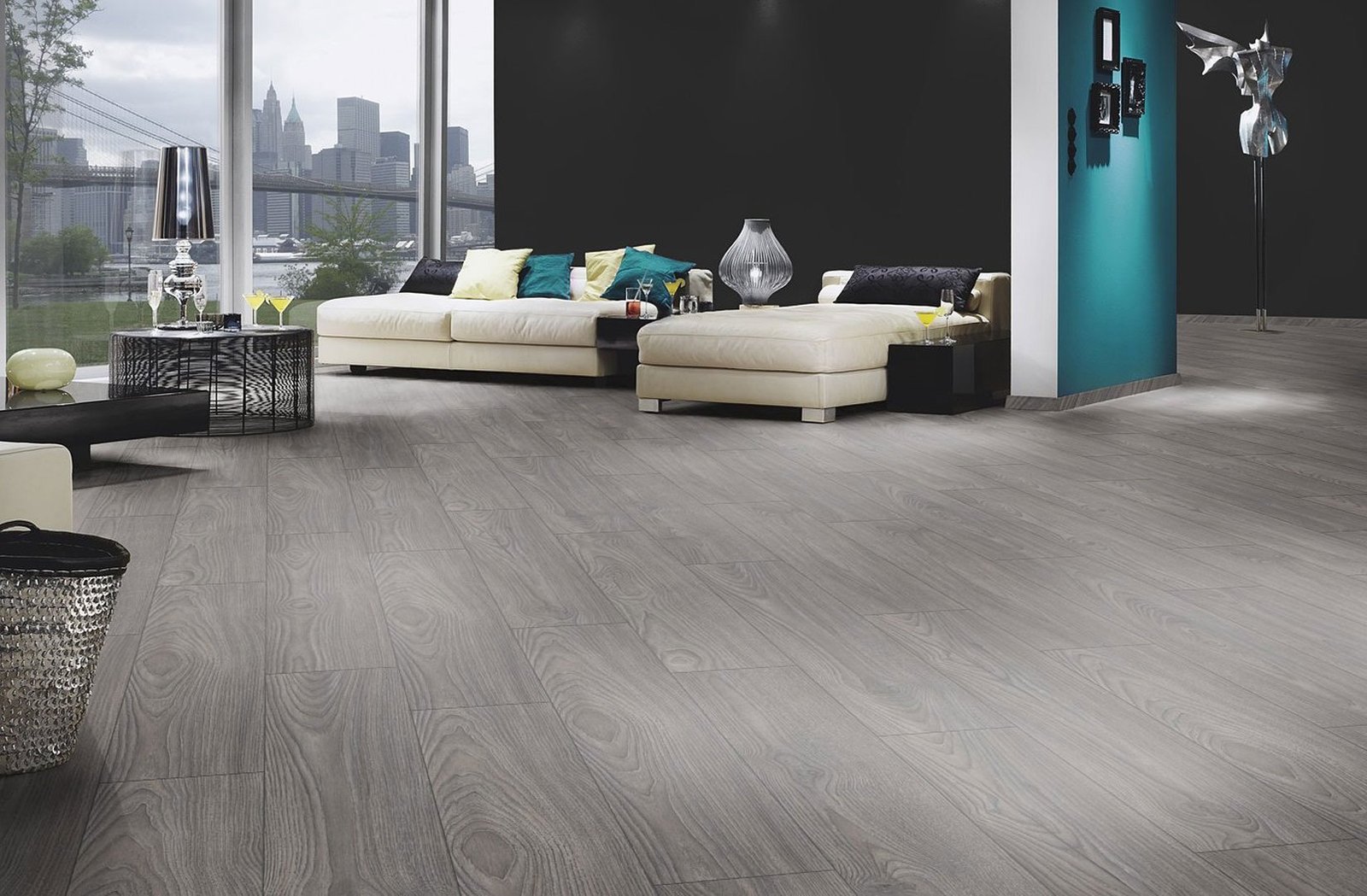
4) Laminate is an affordable flooring option that is easy to install. Today, there is a wide variety of laminate available in terms of quality, colors, and patterns. Choosing a good underlayment helps provide sound insulation in a room.
The base of laminate flooring is typically made of MDF (Medium-Density Fiberboard), covered with a synthetic material, a thin layer of wood, or cork. Wood-covered laminate is environmentally friendly but requires proper care and has low moisture resistance. Cork-covered laminate feels pleasant to touch and is suitable for children’s rooms and bedrooms.
Vinyl laminate is very durable and resistant, making it suitable even for bathrooms, with a lifespan of about 15-20 years.
Quartz-vinyl laminate is a modern material with excellent durability, color retention, fire safety, noise insulation, and moisture resistance. It can be used in both residential and commercial spaces.
3D laminate is visually striking with three-dimensional patterns on the surface, enhancing interior design.
Disadvantages of laminate include:
– Low sound insulation.
– Some types have a relatively short lifespan.
– Certain types may experience color fading or wear on the top layer.
– Quartz-vinyl laminate can be relatively expensive.
5) Linoleum is an artificial flexible material that is easy to install and comes at an affordable price. It is waterproof, making it suitable for bathrooms, and offers softness and sound absorption properties along with thermal insulation. Linoleum can be used with underfloor heating systems, provided the temperature does not exceed 27 degrees Celsius. There is a variety of linoleum options available on the market with different colors and patterns.
Disadvantages include:
– Lifespan of 10-15 years.
– Indentations from furniture may remain.
– Prone to scratching.
– Cannot be restored once damaged.
6) Self-leveling floors are divided into two types: mineral-based floors, which are cementitious, and polymer-based floors, which are synthetic. These floors are primarily used in industrial, sports, warehouse, and commercial spaces, but they can also be used in residential settings if desired. They offer high wear resistance, moisture resistance, and can be restored. Such flooring can last 20-30 years and can be customized in almost any color or combination of colors to delineate different zones within a room.
A special mention goes to 3D floors, which are an original choice for those bold in design. These floors consist of a base layer, a three-dimensional image layer, and a finishing layer. You can choose any image for your floor design.
Disadvantages of these floors include:
– Not a quick installation process.
– Not the most cost-effective solution.
With such a variety of materials available, it’s important to choose the most optimal option for your needs, and we are here to assist you with that. Our experienced designers will help create a beautiful interior, and our specialists will bring it to life for you.