
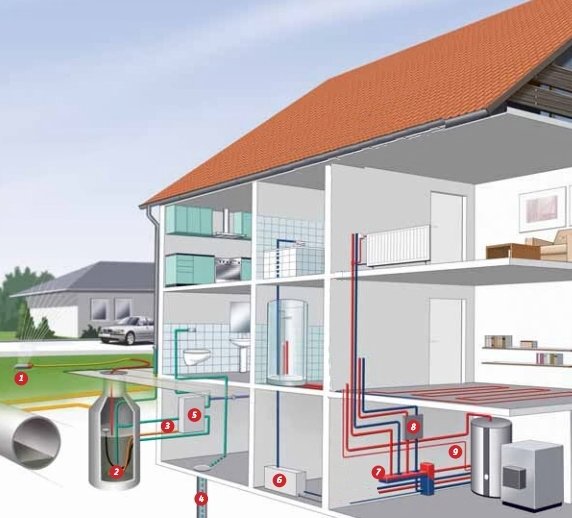
Heating systems are essential for maintaining home comfort during cold seasons.
Common types include furnaces, which heat air using gas, oil, or electricity and distribute it through ducts, and boilers, which heat water or steam for radiators or radiant floors. Heat pumps are efficient options that transfer heat from outside air or ground and can also provide cooling in summer. Radiant heating systems use heating elements in floors, walls, or ceilings to provide even warmth. Wood and pellet stoves are cost-effective and utilize renewable fuel sources, while solar heating systems supplement heating with solar energy. Choosing the right system depends on factors such as climate, home size, efficiency, and budget. Proper installation and maintenance are crucial for ensuring optimal performance.
Our service portfolio



Heated floors bring comfort and coziness to your home. You just need to choose which type of heated floor you prefer, and our specialists will carry out the work with high quality.
Underfloor heating is an excellent solution for any type of room. It saves space occupied by radiators and provides even heating. Switches can be distributed by zones, allowing heating to be turned on only where needed. Even if it’s a large living room or a kitchen combined with a living room, the cable can be divided into several zones with separate switches. This type of heating is more economical because warm air is lighter than cold air and heat evenly rises from the floor upwards. Walking barefoot on a heated floor is a pleasant experience, even if you’re walking on ceramic tiles or a stone floor. This type of heating pairs well with smart thermostats. You only need to set the desired floor temperature and schedule the system’s operating time.
There are two types of underfloor heating systems: electric and water-based.
Types of electric underfloor heating:
- Heating cable
- Thin heating mat
- Carbon underfloor heating
1. Heating cable
Affordable and can be used with any type of flooring. A thermal insulation layer is laid on a level floor, followed by the cable, then a screed, leveling, and finally the floor covering is laid. The downside is that this material takes a long time to heat the floor, up to 3 hours.
2. Heating mat
This is a thin low-power cable attached to a mesh. The cable is zigzagged at equal distances on the mesh, ensuring even floor heating. The mat is installed directly under the tile within the tile adhesive layer, so it doesn’t add height to the floor. To install such a mat under engineered wood, you need to lay a perforated underlay over the mat with adhesive. This type of mat heats the floor quickly and is suitable for use with smart thermostats.
The main downside is generally the relatively high cost.
3. Carbon underfloor heating
A carbon warm floor can be divided into film and rod types.
- Film Infrared Floor: This type is durable and very thin (0.3 to 1 mm). The heating element is made of carbon or a mixture of carbon and graphite. It looks like a mat with the heating element applied and sealed in a three-layer protective film. The heating element can be applied in honeycomb cells, perforated, solid, or striped patterns. The film can be cut at specific points into sections, customizing it to fit the heated area of the room. Even if one section is damaged, the rest of the mat will continue to function. Another advantage is its quick heating capability.
Drawback: When installed under parquet or laminate, it’s not recommended to heat it above 28 degrees Celsius to prevent the flooring from drying out or deforming.
- Rod Carbon Mat: This consists of flexible rods connected by copper wire. This system also continues to operate even if one or more rods are damaged, and it has a self-regulating effect. These grids are installed in a thin layer of screed or tile adhesive. To install such a grid under laminate or parquet, you need to place a thermal insulation layer underneath and a polyethylene film on top of the grid.
These types of carbon warm floors offer efficient heating solutions with specific considerations depending on the flooring material used above them.
A water-based heated floor system is straightforward: pipes are embedded in the floor screed through which hot water circulates, similar to how radiators operate. This method is convenient, easy to install, and durable. It connects to a water heating boiler and provides uniform heating suitable for various floor coverings.
There are three main methods for laying such a system:
Embedding in Concrete Screed: Pipes are embedded in a concrete screed layer of at least 3 cm thickness.
Installation in Grooves (for Wooden Floors): Pipes are laid in grooves cut into wooden floor structures.
Laying Pipes in Expanded Polystyrene (EPS): Pipes are placed within EPS insulation boards.
Regardless of the method, the floor must be leveled and waterproofed before installing thermal insulation. Pipes for water-based underfloor heating can be made of stainless steel, copper, polyethylene, or PEX-AL-PEX (metal-plastic).
Choosing the right boiler is crucial for the system:
Electric Boilers: Popular due to their versatility and wide range of equipment options for any budget.
Gas Boilers: Known for their strength and durability, capable of heating water up to 90 degrees Celsius.
Solid Fuel Boilers (Pellets and Briquettes): Most economical but require more maintenance and care.
The choice of boiler should be based on individual preferences and needs. We not only assist in installing heating systems but also help find the optimal solution that meets all your requirements.